How the carriage horses are cared for
Many riders remember the horse's name long after they forget the guide's. Charleston's carriages are pulled by big draft horses working under rules the city sets, and the companies are used to questions about them. This guide covers the breeds and the weather rules, then how to see the stables for yourself.
Draft horses up front
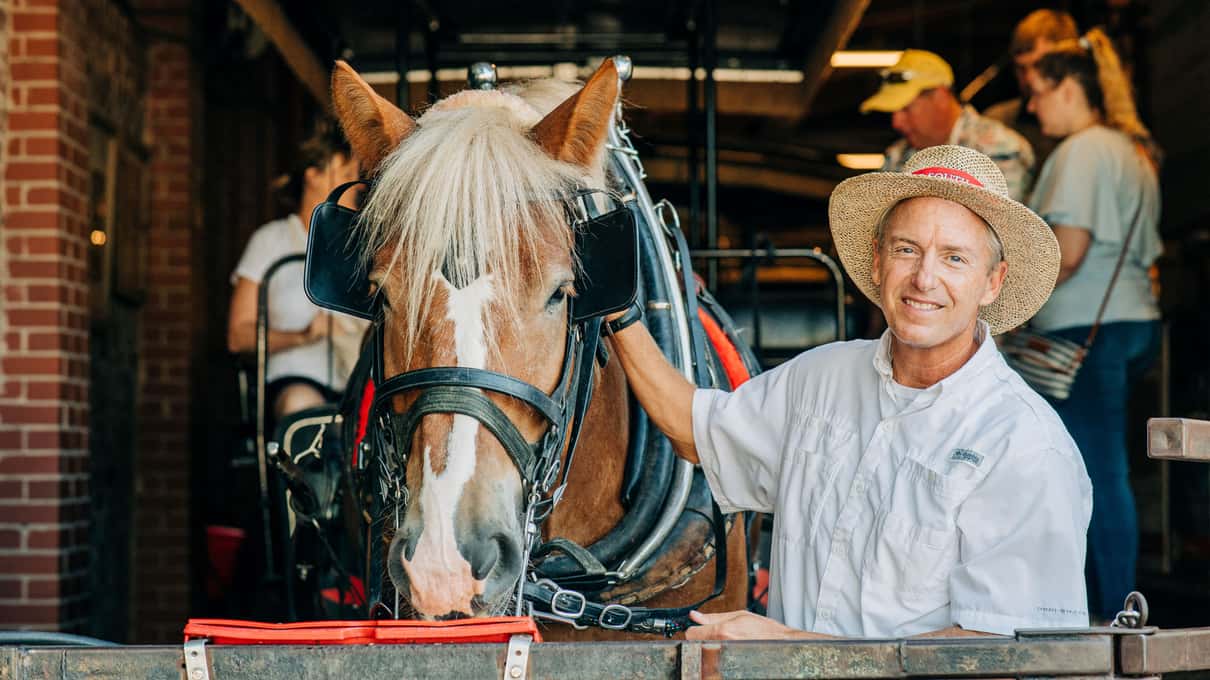
The horses in front of Charleston's tour carriages are draft horses, big and calm working breeds bred to pull heavy loads. Old South's listing names both of the breeds you are likely to meet, the Belgian and the Percheron.
Reviewers love to name them. Clint the Percheron and Curtis the Belgian both turn up in reviews, and one party on a Palmetto private ride wrote about Boeing, a white horse. Horses with names like Moose and Marley appear in other reviews. A covered carriage carries up to 16 riders plus the driver, who stands or sits up front, and that is the kind of work these breeds were bred for.
The rules the city sets
Charleston does not leave the carriage trade to the companies alone. The city sets rules on when the horses may work, including limits for hot weather, and on where the carriages may go. The route lottery, explained in carriage routes and the city lottery, is one of those rules. Out on the street, each horse wears a bag that catches its waste, so the old streets stay clean behind the carriages.
We do not quote ordinance numbers here, because none of the listings give them. What the listings and reviews do show is how those rules play out for riders, and the clearest example comes on a summer afternoon.
Hot afternoons and cancelled rides
On the hottest summer afternoons, the city stops the carriages once the temperature passes a set limit. A recent Palmetto reviewer was warned of possible cancellations at around 95 °F (35 °C) between noon and 5 pm. Palmetto replied that mornings and evenings are the better times to ride in summer. From June to September, book a morning departure or an evening ride so a heat stop does not cost you the hour. If the carriages cannot leave the barn, Old South's GetYourGuide terms give you your money back or let you move to another day. Our guide to the best time for a carriage ride covers the seasons month by month.
Rain and storms
Rain alone rarely keeps the horses in. Palmetto goes out in the rain unless the weather turns dangerous. Its carriages are covered but open at the sides, so umbrellas are not allowed and a poncho is the thing to bring. Old South calls off its haunted evening ride for the whole day if the forecast shows extended rain or storms. If a ride is cancelled for weather, the booking site's terms decide whether you get a refund or a new date. The canopy keeps light rain off your head, though wind can carry it in through the open sides.
Guides who talk about the horses
Palmetto's guides make a point of explaining how the horses are looked after, and reviewers notice. The downtown hour starts at the Big Red Barn, from ~$50, with free cancellation up to 24 hours before.
How the companies describe the care
On Palmetto's downtown tour, from ~$50, the guides make the horses part of the talk. Several reviewers mention hearing how the animals are treated, and one said it mattered to them before they would ride. At Old South's barn on Anson Street, the stable gives shelter while you wait, so you spend the minutes before boarding close to the horses. Old South's historic tour, from ~$50, uses Belgians and Percherons, and the company says it has been running for over 40 years.
Charleston Carriage Works, from ~$50, goes furthest in inviting a look, since guests may tour the stable before or after their ride. Its catch is that it has very few reviews so far, which makes it harder to judge than the larger barns, and the listing says it does not suit people with animal allergies.
A debated topic, and how to judge it
Horse-drawn tours in city streets are debated in some places, and Charleston hears that debate too. One recent reviewer saw a man shouting about the horses along the route and said the guide answered him calmly. We do not take sides here. The fairest way to form your own view is to go and look.
Some details the listings simply do not give, such as how many hours a single horse works in a week or how vet care is arranged. We have not found them in any listing, so we do not repeat what we cannot check. If those questions matter to you, put them to the staff at the barn, who hear them often.
Arrive early at any of the barns, since they are open for you to see the herd before your carriage leaves. Ask the staff whatever you want to know, and judge for yourself. Where the carriage tours start gives the address of each barn and what you will find inside it.
Cooler hours, shorter rides
If heat worries you, the evening is the gentlest time for horse and rider alike. The public haunted rides run 40–45 minutes after dark, compared in haunted and evening carriage rides. For a party that wants a carriage to itself, Palmetto's private evening ride, from ~$275 per group, rolls out in the cooler evening air with a guide reserved for you. Its catch is the length, only about 30 minutes for the price, and the route still comes from the city's draw. What a Charleston carriage tour costs sets that price against the others.